Beta Diamond Products
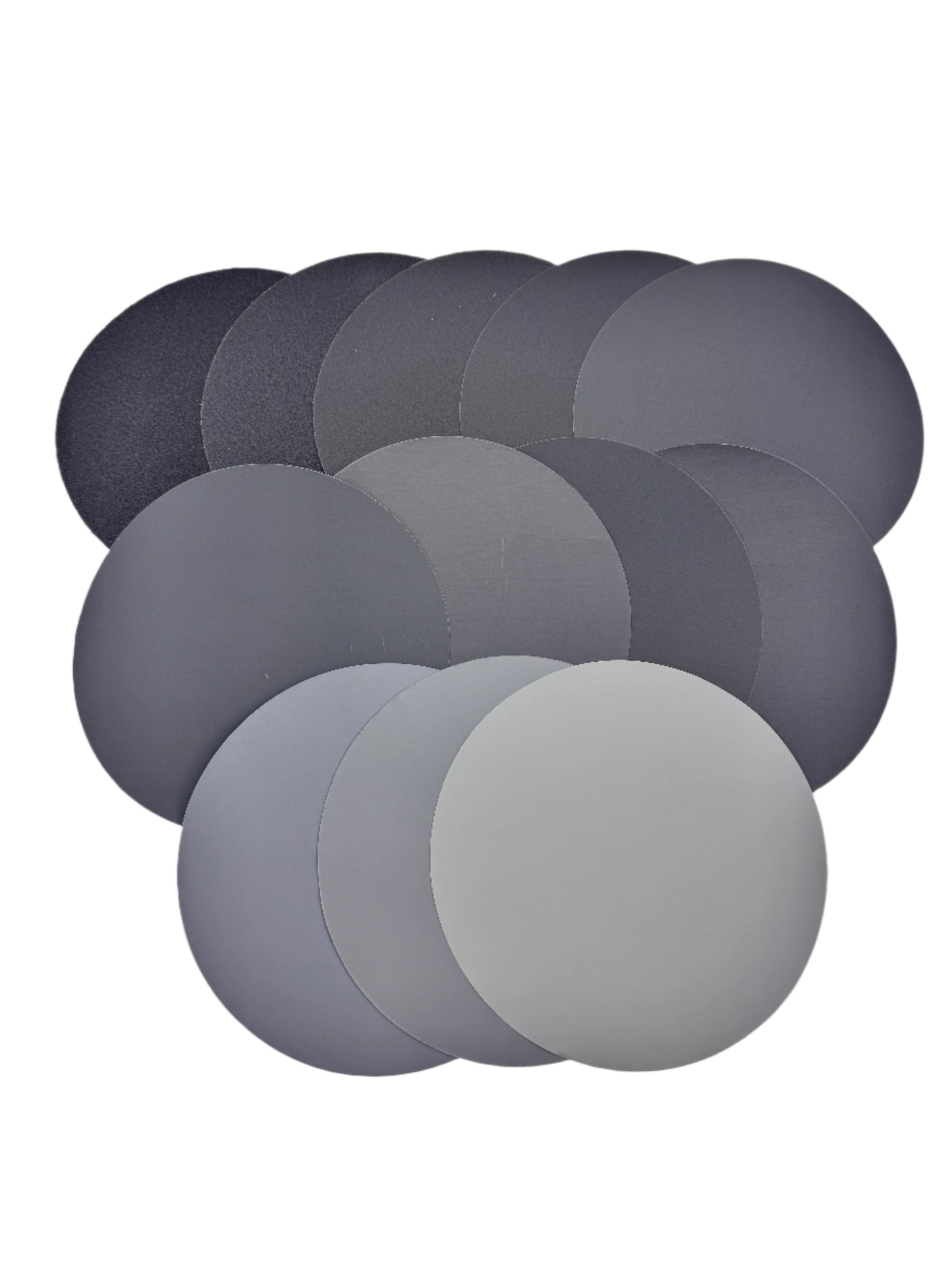
Silicon Carbide (SiC) Grinding Paper - Plain and Adhesive Backed
Share
Couldn't load pickup availability
Silicon Carbide Grinding Paper
What This Product Is
Silicon carbide grinding paper is an abrasive consumable used during metallographic grinding to remove material, flatten specimen surfaces, and reduce deformation introduced during sectioning.
It consists of silicon carbide abrasive particles bonded to a backing material, providing a consistent and controlled cutting surface. Silicon carbide is widely used due to its high hardness and sharp cutting characteristics, enabling efficient grinding across a broad range of materials.
Intended Use in Metallography
This product is used during planar and fine grinding stages to prepare specimens for polishing. It establishes surface flatness and removes sectioning damage, directly influencing polishing efficiency and final surface quality.
Silicon carbide grinding paper is commonly selected when:
- Initial material removal is required after sectioning
- A controlled transition from coarse to fine surface conditions is needed
- A consistent and repeatable grinding surface is required across multiple samples
Proper grinding technique and grit progression are critical to minimizing polishing time and preventing persistent surface defects.
Grit Structure and Coating Differences
Silicon carbide grinding papers are typically manufactured using different coating methods depending on grit size.
- Coarse to intermediate grits (typically up to ~600 grit): Electrostatically coated, which orients abrasive particles for aggressive and consistent material removal
- Fine grits (800, 1000, and 1200 grit): Slurry coated, providing improved abrasive retention and finer material removal control
Slurry-coated abrasives help maintain a more stable abrasive layer during grinding, making them better suited for high-precision grinding steps prior to polishing. :contentReference[oaicite:0]{index=0}
Typical Applications
Silicon carbide grinding paper is commonly used when preparing:
- Metals and alloys
- Ceramics and composite materials
- General metallographic specimens in both research and production environments
Performance depends on material hardness, grit size selection, applied pressure, lubrication, and progression between steps.
When This Product Is NOT Ideal
Silicon carbide grinding paper may not be ideal when:
- Extended durability is required across a high volume of samples
- Highly wear-resistant materials require more durable or longer-lasting grinding solutions
- Applications require maximum repeatability with minimal consumable variation
In these cases, more durable grinding solutions such as rigid grinding discs or diamond-based systems may provide improved consistency and longevity.
Where This Fits in the Preparation Process
Silicon carbide grinding paper is typically used:
- After sectioning
- Before polishing
Grinding is performed in multiple steps, progressing from coarse to fine grit sizes. Each step removes the deformation and scratches introduced by the previous stage, preparing the specimen for polishing.
Key Characteristics
- Abrasive type: Silicon carbide
- Form: Coated abrasive paper
- Application: Metallographic grinding
- Use: Manual and automated preparation systems
- Compatibility: Used with standard grinding equipment and platens
Refer to individual product listings for available sizes, backing types, and grit options.
Performance and Quality Positioning
These silicon carbide grinding papers are designed to deliver consistent cutting performance, controlled scratch patterns, and reliable results across metallographic preparation workflows.
They are comparable in performance and application to grinding papers offered by established industry suppliers such as Struers, Allied High Tech, and Buehler, providing similar preparation outcomes when used within proper grinding procedures.
Best-Practice Notes
- Progress through grit sizes sequentially without skipping steps to reduce residual scratching
- Use adequate lubrication during grinding to minimize heat and deformation
- Apply uniform pressure to maintain surface flatness
- Rotate or reposition samples between steps to improve scratch removal consistency
- Replace grinding paper when cutting efficiency decreases or loading becomes visible
Frequently Asked Questions
What grit size should I start with?
The starting grit depends on the condition of the specimen after sectioning and the amount of material that needs to be removed. Coarser grits are used when significant material removal or leveling is required, while finer grits are used once the surface is flat and major damage has been eliminated.
Selecting the correct starting point reduces preparation time and prevents unnecessary wear on finer consumables.
What is the typical grit progression in metallographic grinding?
Grinding is performed in a sequence of progressively finer grit sizes. Each step should completely remove the scratches from the previous step before moving on. Skipping steps often results in scratches that persist into polishing.
A controlled progression is critical for achieving consistent, repeatable results.
What is the benefit of slurry-coated grinding paper in finer grits?
Slurry-coated papers, typically used in 800, 1000, and 1200 grits, provide improved abrasive retention and more controlled material removal. This allows for better surface refinement and smoother transitions into polishing steps.
They are particularly useful when preparing samples for high-quality surface finishes prior to polishing.
How do I know when to move to the next grinding step?
The next step should be started once a uniform scratch pattern is observed and all previous scratches have been removed. Visual inspection under proper lighting or magnification is typically used to confirm this.
How long should each grinding step take?
Grinding time varies depending on the material and conditions. Rather than using a fixed time, progression should be based on surface condition and scratch removal.
Can silicon carbide grinding paper be reused?
Grinding paper can be used for multiple samples depending on conditions, but performance will decrease over time. As abrasive particles wear or become loaded, cutting efficiency declines.
Replacing grinding paper at the appropriate time helps maintain consistent results.
Is lubrication required during grinding?
Yes. Lubrication reduces heat, removes debris, improves surface quality, and extends consumable life.
Why are scratches still visible after polishing?
Persistent scratches are typically caused by incomplete grinding. This can result from skipping grit sizes, insufficient grinding time, or contamination between steps.
Proper grinding technique is essential to achieving a scratch-free polished surface.
What causes uneven surfaces after grinding?
Uneven surfaces can result from inconsistent pressure, poor mounting, or uneven contact between the sample and grinding surface. Maintaining stable positioning and uniform pressure improves flatness.
When should I replace grinding paper?
Grinding paper should be replaced when cutting efficiency decreases, loading is visible, or consistent surface results are no longer achieved. Worn consumables can increase preparation time and reduce repeatability.